
Anterior hip replacement
The anterior approach to hip replacement
The anterior approach works between your muscles instead of cutting through them — which for many patients means less pain, a lower dislocation risk and a quicker return to life.
What it is, in plain terms
What is anterior hip replacement?
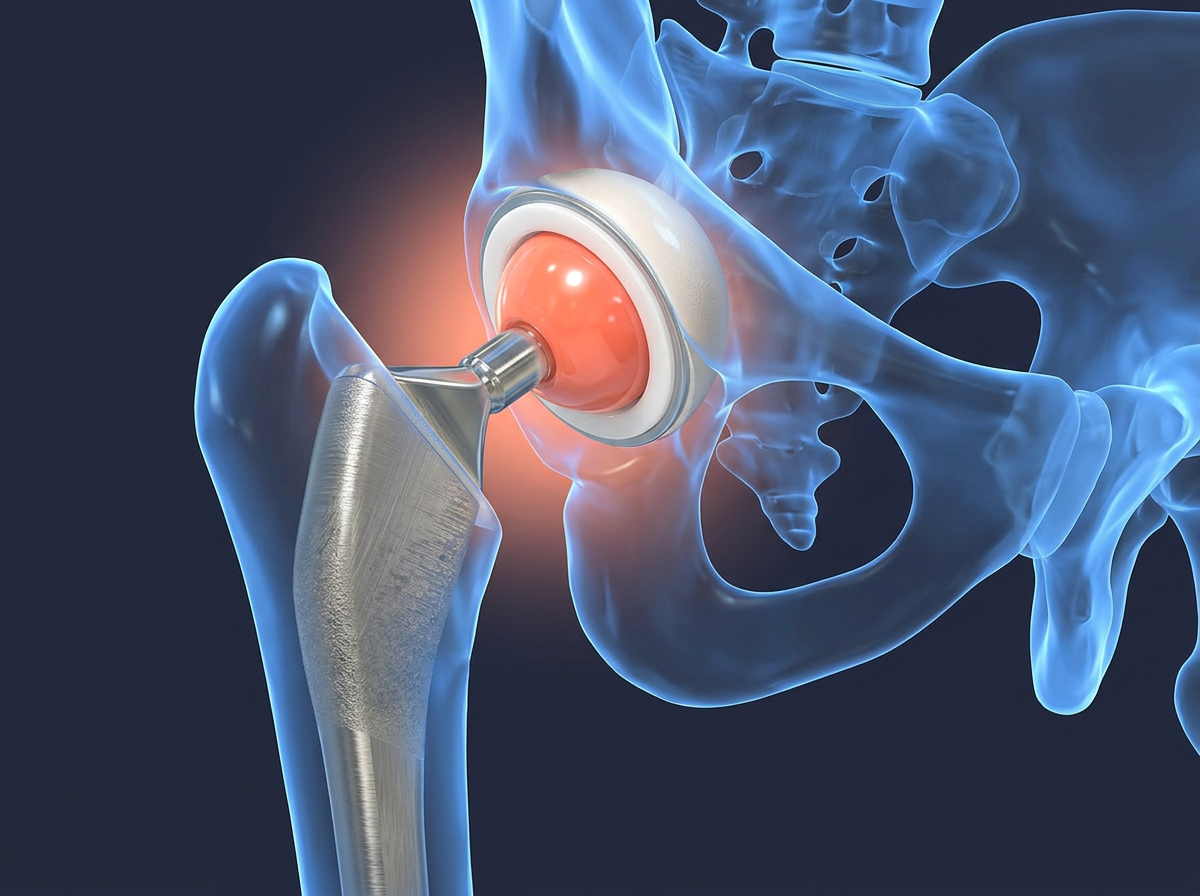
Anterior hip replacement is a total hip replacement performed through the front of the hip, working between muscles rather than cutting through them. In a total hip replacement, the worn-out ball and socket of the hip are replaced with implants. The approach — how the surgeon reaches the joint — affects which muscles are disturbed and how quickly the body recovers.
The direct anterior approach enters from the front of the hip and slips between two muscles, rather than cutting through or detaching them. Studies on the technique suggest patients often walk sooner after surgery and have fewer early restrictions, while the long-term result of the joint itself is similar to a well-done posterior replacement.
Why it's used
What are the benefits of anterior hip replacement?
Muscle-sparing
The anterior approach works through a natural plane between muscles instead of cutting through them.
Earlier mobility
Many patients are walking with a walker or crutches the same day, with shorter hospital stays on average with less pain when comparing other techniques.
Fewer movement restrictions
Because the posterior muscles are left intact, patients are typically given fewer hip movement precautions afterwards (bending, twisting, etc).
Intra-operative imaging
Supine positioning allows live X-ray during surgery to confirm leg length and component position.
Is it right for you?
Am I a candidate for anterior hip replacement?
The anterior approach suits most primary hip replacements, but it isn't automatic for everyone. Body habitus, previous surgery, complex anatomy, or significant deformity may make a posterior or lateral approach the safer choice. That decision is made together in consultation.
The technique also has a recognised learning curve, and the exposure can be more demanding in larger patients. The long-term survival of the hip implant depends much more on accurate positioning and good implant choice than on which approach was used to get there.
Side by side
How is anterior hip replacement different from the traditional approach?
| Aspect | Anterior approach | Traditional posterior/lateral |
|---|---|---|
| Approach | Front of the hip, between muscles — no detachment of the gluteal muscles. | Posterior or lateral approach — typically involves splitting or detaching muscle and tendon. |
| Hip precautions | Few or none in most cases — patients can usually sit, bend, and cross legs sooner. | Standard posterior precautions for several weeks (no deep bending, no crossing legs). |
| Early walking | Same-day standing and short walks are common; many go home the same day or next. | Walking begins early as well, but with a more cautious schedule and more support. |
| Intra-operative X-ray | Supine position allows live imaging to verify component position and leg length. | Position and leg length are confirmed by feel, measurement, and post-op X-ray. |
| Best fit | Most primary hip replacements — body type and anatomy are assessed in consultation. | Reliable across virtually all body types, revisions, and complex anatomy. |
Posterior or lateral approach — typically involves splitting or detaching muscle and tendon.
Standard posterior precautions for several weeks (no deep bending, no crossing legs).
Walking begins early as well, but with a more cautious schedule and more support.
Position and leg length are confirmed by feel, measurement, and post-op X-ray.
Reliable across virtually all body types, revisions, and complex anatomy.
Both are valid; the right choice depends on you.
Recovery Timeline
How long is recovery from anterior hip replacement?
Most patients stand and take supervised steps the day of surgery, drive again around 4 weeks, and reach full recovery by 6–12 months. A typical anterior hip replacement recovery is shown below — yours may move faster or slower.
- Day 1
Standing & first steps
Most patients stand and take supervised steps with a walker on the day of surgery. Many go home the same day or the next morning.
- Week 1–2
Walking at home
Walking aids gradually shorten. With few precautions, patients can usually sit normally, bend, and sleep on either side.
- ~4 weeks
Driving & light routines
Many return to driving and light work once off narcotics and comfortable. Daily walks lengthen.
- 3 months
Back to most activities
Stairs, gardening, golf, and travel feel natural again. Strength continues to build with ongoing physio.
- 6–12 months
Full recovery
Final strength and endurance gains. For most, the new hip stops being something they think about day to day.
Recovery varies by person. Age, baseline fitness, and other health factors all shape the road back. The timeline above describes a typical pattern, not a personal guarantee.
Life after surgery
What is life like after anterior hip replacement?
For most patients, a successful anterior hip replacement means everyday activities — stairs, walks, travel — stop being something they have to plan around. The best measure of a hip replacement isn't the X-ray — it's the moment a patient realizes they climbed stairs without thinking, or danced at a wedding, or simply walked the dog without dreading the first step.
With the anterior approach and a muscle-sparing path, many patients rediscover that freedom sooner. The hip becomes part of you again, not something you manage.